
Money · Editorial
She Turned a Side Project Into a Nation's Favourite. Now What?
Independent makers across Britain are quietly breaking through to national visibility, and discovering that recognition changes everything, except the thing that matters most.
By S/ME
The 6am Question
Before the first order notification pings, before the packaging tape comes out, before she has even made a coffee, she is already making decisions. Not the glamorous kind. Not the ones that get written up in profiles like this one. The small ones: which batch to fulfil first, whether the supplier email from last night needs answering now or later, whether 'later' is even a concept she still has access to.
This is the working day of a founder who built something from almost nothing, and then watched the rest of the country notice.
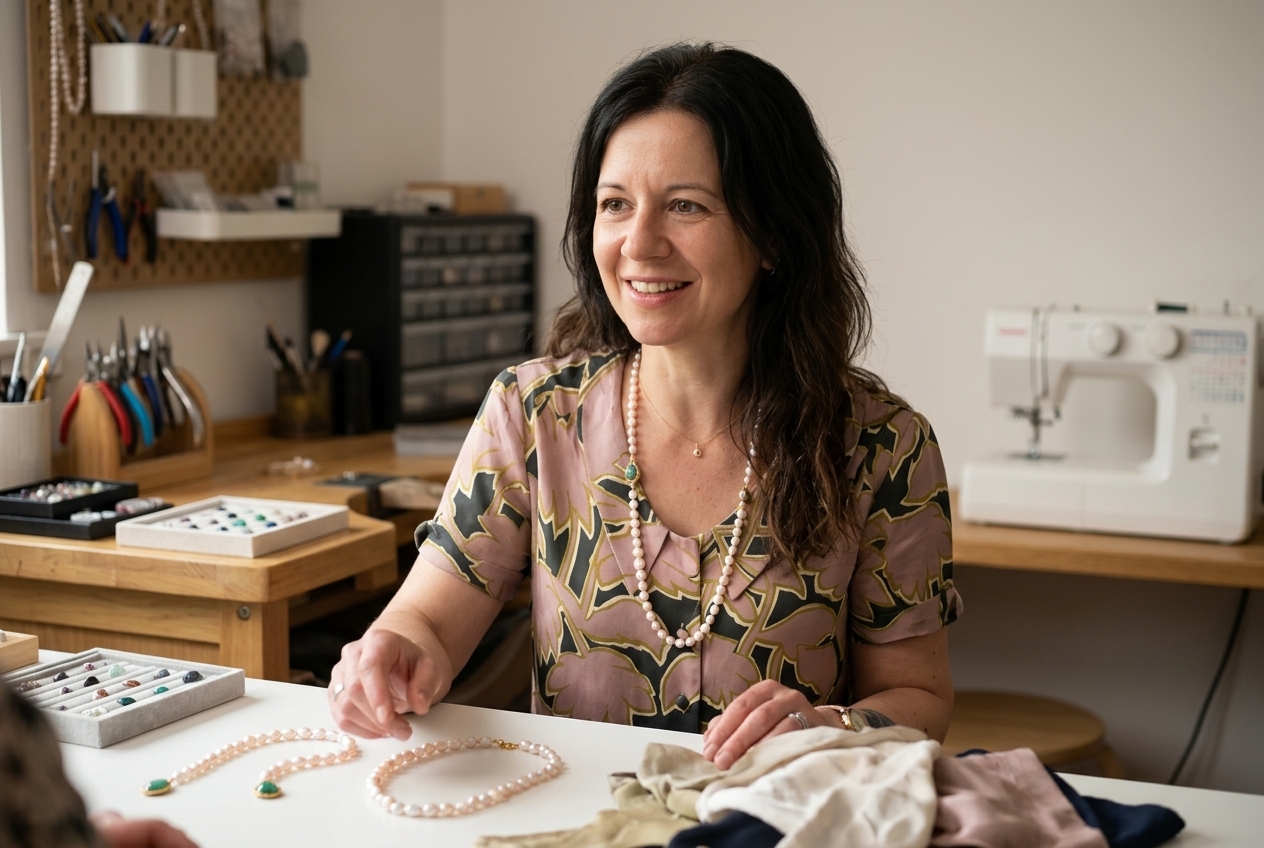
Across Britain right now, a quiet revolution is happening in sheds, spare bedrooms and repurposed garages. Independent product businesses, gift makers, craft founders, small-batch producers, are reaching audiences that a decade ago would have required a distributor, a PR agency and a budget most small businesses couldn't dream of. Social media collapsed that distance. So did a cultural shift towards buying considered, personal, handmade things from people who actually care what happens to them.
The breakthrough, when it comes, rarely arrives with fanfare. More often it arrives as a spike in orders that doesn't stop spiking.
What Recognition Actually Changes
Ask any founder who has crossed from 'doing well locally' to 'featured nationally' what changed, and they will give you the same slightly bewildered answer: everything and nothing.
The visibility is real. The press mentions, the social shares, the moment a product lands in a gift guide read by half a million people, those are genuinely transformative. Overnight, a business that was managing thirty orders a week is fielding three hundred. The inbox becomes a living thing with its own demands. The packaging station, once a corner of the kitchen table, suddenly needs to be somewhere bigger, somewhere permanent.
But the thing that does not change, the thing that arguably cannot change, if the business is to survive the attention intact, is the reason people came in the first place. The handwritten note tucked into every parcel. The refusal to use generic packaging. The decision to keep making the thing themselves, rather than outsourcing it to somewhere cheaper and faster and entirely beside the point.
'The moment you stop doing the thing that made people love it, you've answered the wrong question.'
That tension, between scale and soul, is the central negotiation of a business that has broken through. It is not a problem to be solved once. It is a problem to be solved every single morning, usually before the coffee.
The Production Paradox
Here is the paradox no one tells you about when your small business stops feeling small: the skills that built it are not the same skills that will sustain it at the next level.
Production capacity, logistics, wholesale conversations, the question of whether to take on a studio or a member of staff, these are not creative problems. They are operational ones, and they arrive precisely when a founder is least equipped to deal with them, because they are flat out trying to keep up with demand.
The smartest founders treat this moment not as a crisis but as a forcing function. They make the list of things only they can do, and they fight to protect that list with everything they have. Everything else becomes a conversation about help: a fulfilment partner, a part-time pair of hands, a production run that frees up time for the design work that nobody else can do.
The profile, meanwhile, keeps building. Because the national audience that found them is watching to see what comes next.
What Comes Next
The most interesting thing about the independent makers who have genuinely broken through is not the breakthrough itself. It is the choices they make in the eighteen months that follow.
Some license their designs and lose a little of what made them distinctive. Some expand too fast and spend two years clawing back quality. And some, the ones worth watching, make a decision that looks, from the outside, like restraint, but is actually something more strategic. They decide what they will not become.
They will not become a brand that feels like a brand. They will not become the thing that fills the shelves of a chain retailer and gets forgotten by February. They stay specific, stay small in the ways that count, and trust that the audience who found them for exactly those reasons will keep finding them.
It is, in the end, the oldest business lesson there is, dressed up in new circumstances. Know what you are. Know who it is for. Don't let success talk you out of either.
The coffee is finally made. The orders are open. The day begins again.
Keep reading

Business
The Freelance Marketing Expert Big Brands Call When Things Need Fixing
Jonathan Clarke · JDCC

Spotlight
The Lawyer Who Learnt to Listen: How Larissa Hawkins Is Rewriting the Rules of Career Coaching
Larissa Hawkins · GlassFrog

Services
LeaseAssured Is Making the Commercial Lease the Smartest Thing You'll Sign
Daniel Yeo · LeaseAssured
Interview
5 Questions with Claire Martin
Claire Martin · L’Atelier de Claire